
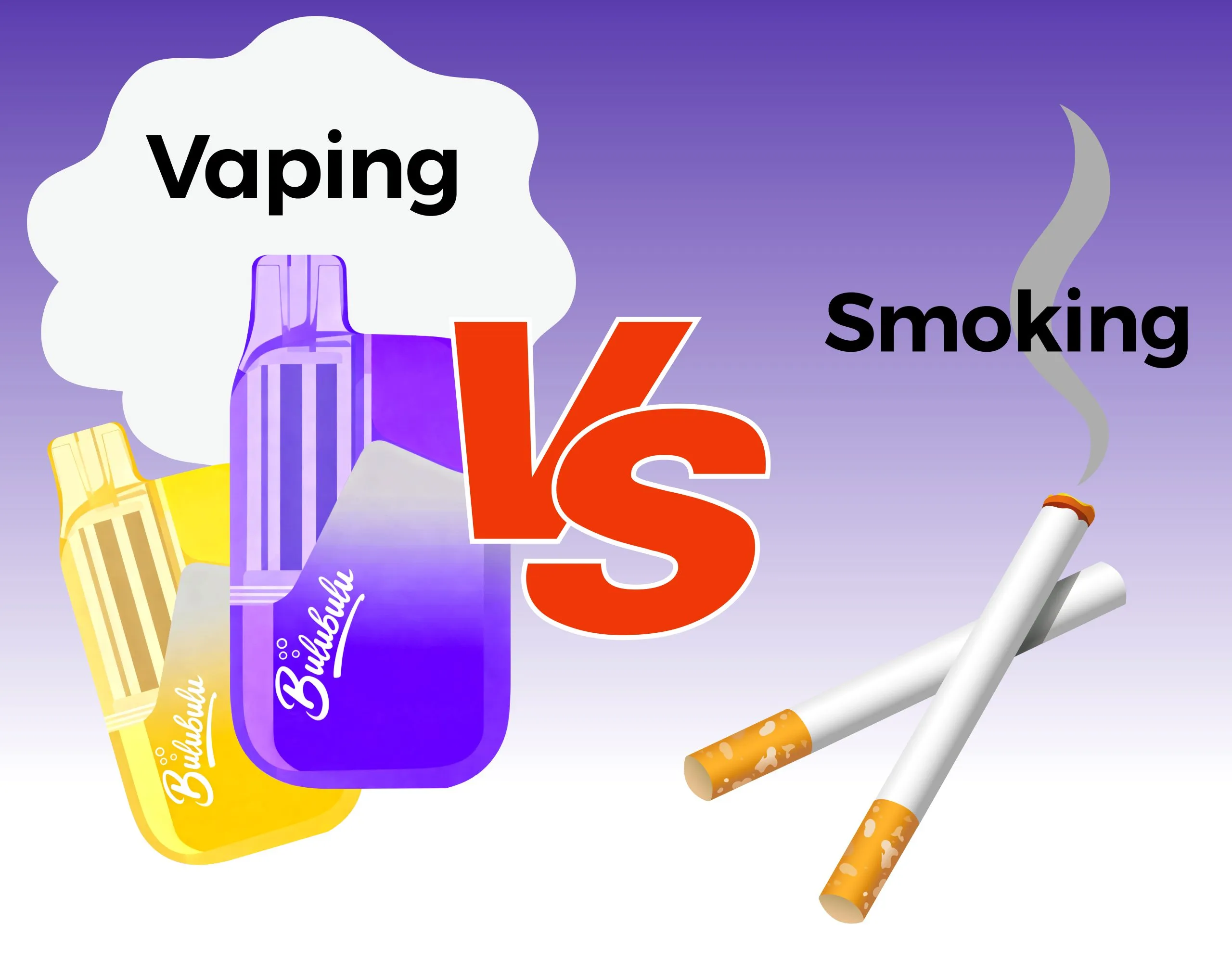
Vaping vs Smoking
The debate between vaping and smoking often centres on one key question: which poses fewer health risks? To answer that, we need to look at how they differ in composition, use, and impact.
The Known Dangers of Traditional Smoking
Traditional cigarettes work by burning tobacco, a process that releases more than 7,000 chemicals, including at least 70 known carcinogens such as tar and benzene. Decades of research have conclusively linked long-term smoking to lung cancer, heart disease, and chronic obstructive pulmonary disease (COPD). It is a leading cause of preventable death worldwide, contributing to over 8 million fatalities each year.
How Vaping Differs
Vaping devices, also known as e-cigarettes, operate differently. They heat a liquid solution (e-juice) containing nicotine to produce an aerosol without any combustion of tobacco. This means that vaping avoids the creation of tar and many of the toxic byproducts associated with burning. According to analyses by bodies such as the UK’s Public Health England, this fundamental difference makes vaping approximately 95% less harmful than smoking for long-term adult smokers.
Understanding the Risks of Vaping
While significantly less harmful than smoking, vaping is not risk-free. Most e-liquids contain nicotine, a highly addictive substance that can harm adolescent brain development. Certain additives, like vitamin E acetate found in some THC-containing cartridges, were identified as the cause of the 2019 EVALI lung injury outbreak in the U.S. Furthermore, the secondhand aerosol produced by vaping is not merely “water vapour”; it contains potentially harmful substances like formaldehyde, albeit at far lower levels than cigarette smoke.
Who Are These Products For?
This distinction is crucial. For non-smokers, particularly teenagers, vaping is not safe. It can lead to nicotine addiction and may act as a gateway to traditional smoking. For current adult smokers who are unable or unwilling to quit nicotine entirely, switching to regulated vaping products can be a form of harm reduction. However, it is vital to emphasise that this is not a “healthy” choice. The best possible health outcome remains complete cessation of all nicotine products, ideally with support from methods like nicotine replacement therapy (NRT) or behavioural counselling.
Conclusion: A Clear Path Forward
In summary, while the evidence suggests that vaping is less harmful than continuing to smoke, it is not harmless. The ultimate goal should not be to choose the “better” of two harmful options but to avoid both altogether for the sake of long-term health.